We Rolled Tape on Thanksgiving and Got a Family Documentary by Accident
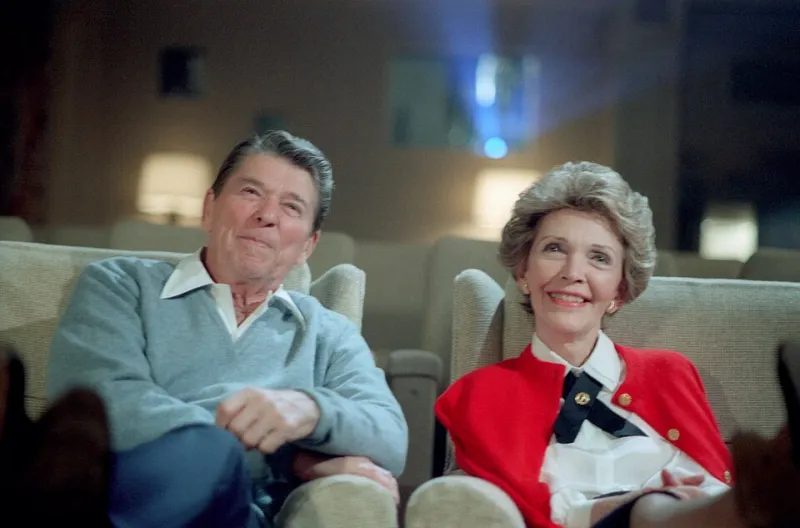
Photo: President (1981-1989 : Reagan). White House Photographic Office. 1981-1989, Public domain, via Wikimedia Commons
Last Thanksgiving, I put a $59 USB microphone on the coffee table, opened Audacity on a laptop I wasn't using, and asked my family to do something deeply weird: talk over a movie. Not in the rude way. In the DVD-commentary way. I told them we were making a private track for ourselves—a recording of the room watching 'Planes, Trains and Automobiles'—and that if it went badly, we'd delete it and never speak of it again.
My aunt asked if this was for the internet. My cousin asked if she had to be funny. My dad asked if we could start after the football game. It was, in other words, a normal Thanksgiving.
The Setup: One Microphone, One Movie, Zero Rehearsal
The gear was not impressive. A USB condenser mic, a laptop, and a free audio editor. I set the mic on a stack of coasters, pointed it at the couch, and hit record a few minutes before the movie started. I clapped once in front of the TV so I'd have a sync spike to line up later. That's it. No lavaliers, no mixer, no soundproofing. The room still had the dishwasher running and someone's phone buzzing against a plate.
The movie choice mattered. 'Planes, Trains and Automobiles' is a holiday film people already know, which meant nobody had to follow the plot. They could drift in and out. They could talk back. A familiar movie is better for this kind of project than a new one, because the commentary isn't competing with discovery. It's riding on top of memory.
The First Ten Minutes Were Awkward
For the first act, everyone performed. My uncle did a fake critic voice. My cousin whispered 'this is so weird' directly into the microphone. Someone asked if we had to keep the TV volume low. I said yes, because otherwise the track would be 90 percent movie and 10 percent us. They nodded and then kept talking over the quiet parts anyway.
The awkwardness wore off around the scene where Steve Martin tries to get a cab. That's when the room started heckling the movie in a comfortable way. Not mean. Familiar. My dad pointed out that the airport carpet looked exactly like the one at a hotel we stayed at when I was a kid. My aunt said she'd once missed a flight because she was reading a paperback and didn't hear the gate change. My cousin said the whole movie could be solved with a smartphone. Someone said, 'That's the point, genius.'
That's when I realized we weren't just recording commentary. We were recording the family's version of the movie. The film was the prompt. The real content was the stuff it unlocked.
When the Movie Became a Conversation Piece
A strange thing happens when people know they're being recorded, even casually. They start making connections they wouldn't make if the TV were just on. My grandmother, who usually watches movies with the sound low and a crossword on her lap, told a story about a bus station in Ohio that I'd never heard. My uncle, who is not a talker, explained why the rental car scene is the most accurate part of the film. My cousin did a running bit about the pillows in the motel room. None of it was planned. All of it was better than the movie's actual jokes.
The commentary also changed how we watched. People stopped scrolling. They stopped leaving the room during slow parts. They leaned in. When the movie got quiet, someone filled the space. When a scene ended, someone asked a question. It was the most engaged my family had been with a movie in years, and the movie was not even the main event. The main event was the room.
The Edit Is Where the Real Work Happens
Recording was easy. Editing was the project. I had about two and a half hours of raw audio—90 minutes of movie plus all the talking before and after. I imported it into Audacity, lined up my clap with the movie's opening, and then started cutting.
The first pass was brutal. I trimmed dead air, lowered the movie audio underneath the voices, and cut the long stretches where nobody said anything interesting. The second pass was more fun. I kept the moments where people laughed at a line before it happened. I kept the story about the bus station. I kept my aunt saying, 'Oh, I hate this part,' three seconds before the part she hated. I cut the political tangent, the argument about whether the thermostat was too high, and the fifteen minutes where someone was in the kitchen looking for the good tongs.
The final track was twenty minutes. Not twenty minutes of wall-to-wall jokes. Twenty minutes of the room being the room. I added a little fade-in, normalized the levels, and exported it as an MP3. Then I sent a private link to everyone who was there. No public upload. No monetization. Just a weird little family artifact.
What a Private Commentary Track Actually Changes
I've listened to the track twice since. The first time, I listened for mistakes. The second time, I listened for voices. That's the real shift. The movie scenes are now tied to the people in the room. When I watch the rental car scene, I hear my uncle's explanation. When the bus station comes up, I hear my grandmother. The film hasn't changed, but my memory of it has. It's now a family document with a movie underneath it.
That's the part I didn't expect. Commentary tracks are usually about the filmmakers explaining choices. This one was about the audience explaining themselves. It turned a passive watch into an event, and it gave us something to keep that isn't a photo of everyone looking at a phone. It cost almost nothing. It took one weekend. And it made a movie we've all seen a dozen times feel like it belonged to us.
The Leftovers Are the Point
This Thanksgiving, I'm doing it again. Different movie, same mic, maybe a second one near the kitchen. I'm not trying to make anything polished. The first track proved that the rough version is the point. The coughs, the interruptions, the someone yelling 'wait, rewind'—that's the texture. That's the thing you can't get from a studio commentary.
If you try it at home, keep it simple: one mic, one familiar movie, one clap for sync, and a promise that nobody has to be funny. Then cut it down to the best twenty minutes. You'll end up with something better than a home video. You'll end up with a room.