The Channel Between the Channels: A Saturday Lost to Public-Access TV

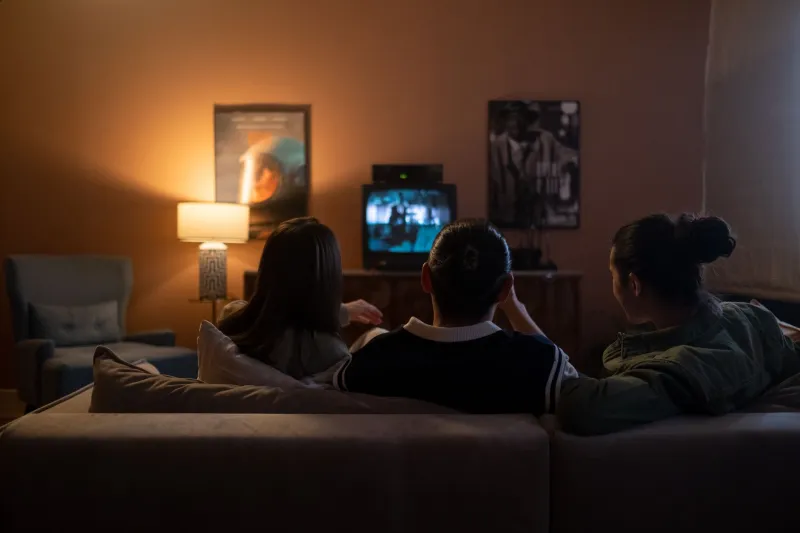
On a gray Saturday in November 2026, I did something I had not done in years: I sat down with a remote and flipped through channels I did not choose. No algorithm. No watchlist. Just local public-access TV, the stuff wedged between the weather radar and the channel that plays nothing but infomercials. I meant to give it ten minutes. I gave it most of the afternoon.
The Town Square With a Camcorder
Public-access television in the US is usually part of PEG access — public, educational, and government channels. The money often comes from cable franchise fees, and the operations are a patchwork: nonprofits, city offices, school districts, library systems, and volunteer-run studios. In 2026, many stations still cablecast on local cable systems, and many also stream on YouTube, Facebook, or their own websites. The production values range from a community-college broadcast lab to a laptop, a ring light, and somebody's den. That range is the point.
This is not prestige TV. It is not trying to be. It is television as a public utility with a sense of humor.
What I Watched
My first stop was a cooking demo hosted by a man in a apron who measured everything in coffee mugs. He made a chicken casserole, took a phone call from his sister, and burned the top layer of cheese. Nobody cut it out. It was better than half the cooking shows I have paid to stream.
Next came a city-council call-in show. A resident spent twelve minutes asking about a stop sign at an intersection I have never seen. The council member kept saying they would look into it. A second caller asked about leaf pickup. A third caller complained about the first caller. It was slow, petty, and weirdly riveting — local democracy as a talk show.
Then I found an amateur horror host in a cardboard coffin introducing a 1970s creature feature. His jokes were terrible. His set was held together with tape. He introduced a commercial break by saying, 'Stay tuned, unless you have something better to do, which, fair.' I stayed tuned.
After that: a hyperlocal talk show with a school board candidate and a man promoting a pancake breakfast. A swap shop where people called in to sell a snowblower and a set of golf clubs. A replay of a high school football game. A church service. A Spanish-language community news program. A block of experimental animation that looked like a screensaver had a nervous breakdown.
Why It Beats the Algorithm
The appeal is not nostalgia. It is surprise. Nobody is optimizing this feed for my engagement. The host is not trying to go viral. The caller is not building a personal brand. The show is not trying to sell me a subscription. It is trying to tell me when the leaf pickup starts.
That low-stakes randomness is rare in 2026. Streaming services are designed to keep me in a lane. Public access has no lane. It has a bulletin board, a camcorder, and a schedule. You might get a cooking show, a zoning hearing, a horror host, or a woman explaining how to compost. You might get all four in one afternoon.
The other thing public access has is local texture. A city-council call-in show in a small town is not a generic product. It is about that town. The pancake breakfast is real. The stop sign is real. The snowblower is probably still for sale. That specificity is what makes it worth watching, even when it is boring. Especially when it is boring.
How to Find Your Local Access Channels in 2026
You do not need a cable subscription to sample some of this, but it helps. Here is a practical starting point:
- Check your cable lineup for channels with names like public access, community television, or PEG. The channel numbers vary, but they often sit in the lower range.
- Search your city or county name plus public access TV, PEG channels, or community television. Many stations have a program schedule online.
- Look for the station on YouTube, Vimeo, Facebook, or a Roku app. A lot of local access content now lives online, even if the cable channel still exists.
- Ask at your library reference desk. Librarians know the local media landscape better than most people.
- Check municipal websites and public meeting archives. City-council meetings are public-access TV's most reliable genre.
- Browse the Internet Archive for old tapes and community media collections. It is a rabbit hole, in the best way.
- If you have an antenna, rescan your channels now and then. Low-power TV and local stations sometimes carry community programming.
Formats That Deserve a Wider Audience
A few recurring public-access formats are worth your remote:
- The mug-and-a-prayer cooking show. A local host, a home kitchen, and a recipe that may or may not work. The mistakes are the show.
- The city-council call-in. Local government as live theater. The stakes are small, which is exactly why the callers care so much.
- The amateur horror host. A basement set, a cheap costume, and a public-domain creature feature. This is community theater with a movie attached.
- The hyperlocal talk show. Candidates, fundraisers, pancake breakfasts, and the occasional argument about parking.
- The swap shop. People selling things they should probably just give away. It is eBay with worse lighting and better manners.
- The high school sports replay. You do not need to know the teams. The parents in the crowd are the real stars.
- The experimental animation block. Sometimes baffling, sometimes beautiful, always a reminder that someone nearby is making something strange.
Make It a Thing
I am not suggesting you replace your Friday-night movie with a zoning hearing. But I am suggesting you give public access an hour. Pick a channel you have never watched. Do not skip around. Keep a little log of what you see. Invite a friend and make a rule: whoever laughs first has to make the snacks.
What I liked most about my Saturday was not any single show. It was the feeling that television could still be a place, not just a product. A place with bad lighting, a phone bank, a stop sign, and a guy in a coffin. That is the kind of thing worth keeping on the remote.