The Best Seat in the House Is in the Small Room: A Case for Skipping the Blockbuster in 2026
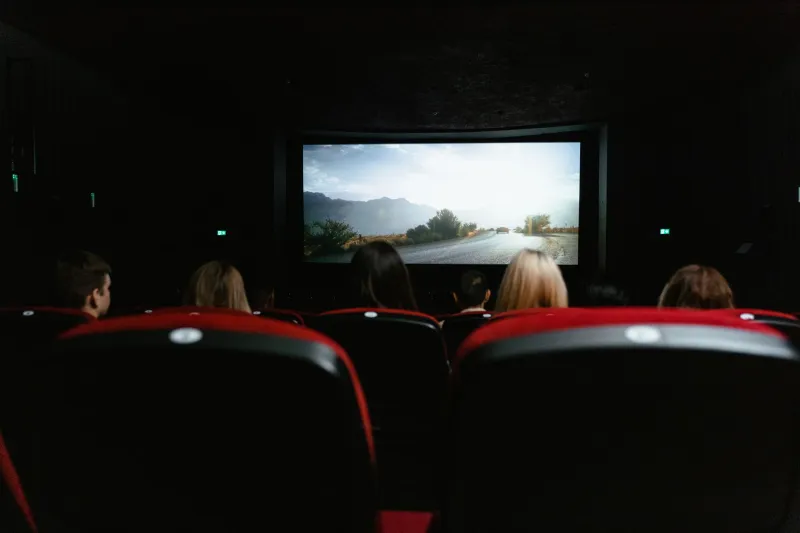
I want to tell you about a Tuesday night in a theater that seats about 110 people, of which maybe 30 were occupied. The movie was a small drama with no franchise, no post-credits scene, and no reason to exist except that somebody wrote it and somebody else paid to film it. The audience laughed at the same time. Nobody checked a phone. When the lights came up, a stranger two rows down said "huh" out loud, in a way that meant she was still working through it.
That was the best night I've had at the movies in years. And I've had plenty of loud ones.
The Blockbuster Isn't the Problem — It's the Default
Let me be fair to the tentpoles. I grew up on them. My first real movie memory is a summer matinee with sticky floors and a soda the size of my torso, and I still get a small jolt when the studio logos go dark and the room goes quiet. Big movies are not the enemy. The problem is that they became the only thing a lot of us consider when we say "let's go to the movies."
That default has a cost. A $200 million release has to open enormous, which means it has to be for everyone, which usually means it's about a guy in a suit saving a city. The stakes are planetary. The emotions are safely universal. It's a perfectly engineered two hours that I forget by Thursday, and I say that as someone who buys the ticket anyway.
Meanwhile, the mid-budget drama and the oddball comedy — the stuff that used to be the bread and butter of American moviegoing — got squeezed into a narrow window. It plays for two weeks in a handful of cities, then vanishes to streaming, where it's buried under a thousand other options and a homepage algorithm that thinks I want to watch a documentary about a heist.
What's Quietly Working in 2026
Here's what I keep noticing this year. The films with the least marketing are the ones people actually talk about afterward. A small ensemble drama about a family selling a house. A comedy with one recognizable face and a premise that sounds bad on paper and works completely on screen. A documentary that runs 84 minutes and doesn't explain itself twice.
These aren't the movies that get billboards. They're the movies that get a text from a friend at 10:40 p.m. saying "I think you'd like this one, don't look it up." That's a better marketing engine than anything a studio can buy, and it only runs if people are in seats.
The pattern holds from the last couple of years, too. Movies like Thelma or Hundreds of Beavers didn't win because of scale. They won because the people who saw them couldn't stop telling other people. That's genuine history, and it's the model the smaller releases are still running on in 2026.
The Practical Case, Which Is Also the Cheap Case
I'm not asking anyone to be noble about this. Choosing the smaller screen down the hall is genuinely a better deal, and here's the math.
The ticket is cheaper. Often by half. A Tuesday night at my local indie is $9.50. The multiplex down the highway wants $19 before fees.
The preshow is shorter. Fifteen minutes of trailers and one ad for a car, versus twenty-five minutes of trailers, three ads, and a promo for the theater's own loyalty program.
The crowd is there on purpose. This is the underrated one. A half-full room of people who chose a small movie over a big one tends to be a respectful room. Fewer phones, fewer conversations, fewer people arriving forty minutes late with a tray of nachos.
You can actually get a seat. No assigned-seat scramble, no Fandango fees, no showing up ninety minutes early.
And you leave with something to talk about. I have never once discussed a post-credits scene on the drive home with any real energy. I have absolutely argued about the ending of a small drama for the entire ride and then again the next morning.
How US Audiences Actually Keep These Movies Alive
The uncomfortable truth about theatrical distribution is that the decisions get made in the first ten days. A distributor looks at opening weekend numbers, not aggregate goodwill. So the single most useful thing you can do is show up early, not eventually.
A few things that actually move the needle:
- Go opening weekend if you can. A strong Friday-to-Sunday tells a distributor to hold the screen another week and add three more cities.
- Use the subscription. If you're already paying for AMC A-List or Regal Unlimited, the marginal cost of a small movie is zero. That's free ammunition.
- Buy something at concessions. Theaters make their margin there, not on the ticket. A popcorn is a vote.
- Ask for it. Smaller chains and independent theaters take requests seriously. If a movie isn't playing near you, the box office manager is often the person who decides whether it does.
- Tell one person, specifically. "You'd like this" beats "it's good." Vague praise evaporates. A recommendation aimed at a single human being gets a ticket sold.
- Skip the "I'll catch it on streaming" reflex. That reflex is precisely why the window keeps shrinking. If everyone waits, the window closes, and then the movie doesn't get made next time.
What I'm Actually Saying
I'm not telling you to give up the big screen. Go see the giant thing. Bring the whole family, buy the bucket, enjoy the rumble. There's a reason that experience survived a decade of disruption.
But build one small night into the rotation. Pick the theater with the squeaky door and the poster frames that haven't been updated since spring. Take a chance on the movie with the boring title and the one actor you half-recognize. Sit somewhere in the middle. Let a room of thirty strangers laugh at the same time.
In 2026, with everything fighting for the biggest possible audience, the most interesting thing happening in American moviegoing is happening small, in rooms that aren't full yet. Those seats are still there. Somebody just has to sit in them.