The Part After the Plot: What Thirty Full Credit Rolls Taught Me
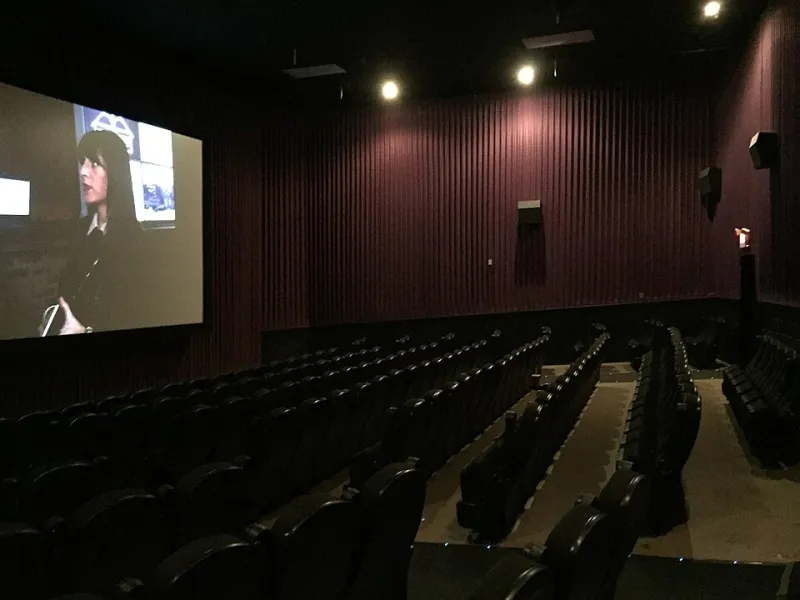
Photo: Famartin, CC BY-SA 4.0, via Wikimedia Commons
By mid-November, my living room had developed a very specific kind of mess: a stack of index cards, three pens that only worked when held at the right angle, and a notebook filled with names I would have otherwise never noticed. For thirty days, I ran a simple experiment. I stayed seated through the credits. Not just the first few cards. Not just the part with the song everyone likes. I stayed until the screen went black, the theater lights came up, or the streaming service shoved me into a “next episode” countdown and I had to scramble for the remote.
The Rule Was Simple, the Sitting Still Was Not
My rules were modest. For every movie I watched from late October through mid-November, I would not leave my seat during the credits. I would jot down three things: one name, one role, and one strange thank-you. The name could be anyone—a gaffer, a negative cutter, a music clearances coordinator, a driver. The role had to be specific. The thank-you had to be odd enough to make me curious.
On paper, this sounds like a harmless hobby. In practice, it fought against every moviegoing instinct I have. I am a person who starts reaching for my jacket the second the villain is handled. In a theater, I am usually halfway up the aisle before the first production company logo fades. At home, I have trained myself to treat credits as an invitation to check my phone, rinse a glass, or decide whether the movie actually earned a place on the shelf.
Staying put felt weirdly vulnerable. The story was over. The room was still dark. And there I was, reading names while everyone else moved on.
One Name, One Job, One Weird Thank-You
The notebook kept me honest. Without it, I would have drifted. With it, I started looking for patterns.
The first thing I noticed was how often the same job titles appeared in wildly different movies. A film with a huge crowd scene and a film with two people in a kitchen still needed a first assistant director, a script supervisor, a sound mixer, and somebody thinking about continuity. The scale changed. The grammar of making a movie did not.
The second thing I noticed was the thank-you section. It is a strange little ecosystem of gratitude. I found thanks to a town’s fire department, a local diner, a dog named Biscuit, a rental house in New Mexico, and one very heartfelt acknowledgment of “the entire state of Georgia.” Some of these were practical. Some were clearly personal. All of them suggested that a movie is not made in a vacuum. It is made in places, with neighbors, permits, borrowed parking lots, and people who probably did not expect to end up in a credit roll.
My favorite card from the month was simple: a name I did not recognize, a role listed as “animal wrangler,” and a thank-you to “the family who let us use their driveway for eleven days.” I have no idea what movie that was anymore. I just know I want to live in a world where that driveway got its due.
The Crew List Is a Map of Where the Movie Was Made
I started reading credits like a travelogue. Unit locations, postproduction facilities, sound stages, catering companies, local casting offices—the scroll quietly tells you where a film came from. A Los Angeles production has a certain rhythm. A New York production leaves a different trail. A movie shot in a smaller market often lists names that feel closer to the town than to the industry.
That was the part that stuck with me most. We talk about movies as if they arrive fully formed from a studio logo, but the credits show the actual geography of the work. Someone drove the equipment. Someone fed the crew. Someone handled payroll in a city where the production was probably a temporary visitor. Staying for the credits made the movie feel less like a product and more like a job that a lot of people showed up for.
Music Gets Its Own Final Scene
I also started hearing the endings differently. When you sit through the credits, the music is not just background anymore. It is the last act. A score that felt bombastic during the climax might turn tender over the names. A needle drop that seemed like a joke in the film can become a weirdly perfect farewell. Sometimes the credits song is the only place a movie lets its guard down.
On one streaming night, I stayed through a long scroll of visual effects names while a low synth pulse kept building under the text. I had already decided the movie was fine. Not great. Fine. But those last four minutes did something the plot had not. They made the whole thing feel bigger than its story. That is not nothing. That is craft sneaking up on you after you thought the conversation was over.
The Quiet Part After the Plot
The experiment also changed how I behaved in theaters. I became one of those people who stays. Not in a smug way—I am not judging anyone who bolts for the parking lot. But I started noticing the small theater rituals that happen during the credits: the usher sweeping a row, the projectionist checking the screen, the couple whispering about what they just saw, the person who waits for the post-credits scene and the person who pretends they are not waiting for the post-credits scene.
There is a strange intimacy to that moment. The movie has stopped performing. The audience has stopped performing too. People stretch. They laugh at a name. They compare notes. The room exhales.
What Thirty Screen-Black Endings Taught Me
By the end of the month, I had filled most of a notebook and missed exactly zero plot points. That was the joke, of course. Staying for the credits did not give me hidden answers. It gave me a different relationship with the last five minutes of a movie—and with the people who made it.
I am not going to pretend I will do this forever. There will be nights when the babysitter is waiting or the parking meter is running or the couch is calling. But I have kept one habit from the experiment: before I leave, I read one name. Just one. It takes about four seconds. It is enough to remember that the story on screen was built by a lot of hands, in a lot of places, for a lot longer than the running time suggests.
The credits are not the movie, exactly. But they are the part that reminds you a movie was made by people. That is worth staying for.