The Two-Minute Feature: What a Month of Trailers Taught Me About Hype, Attention, and Picking Movies
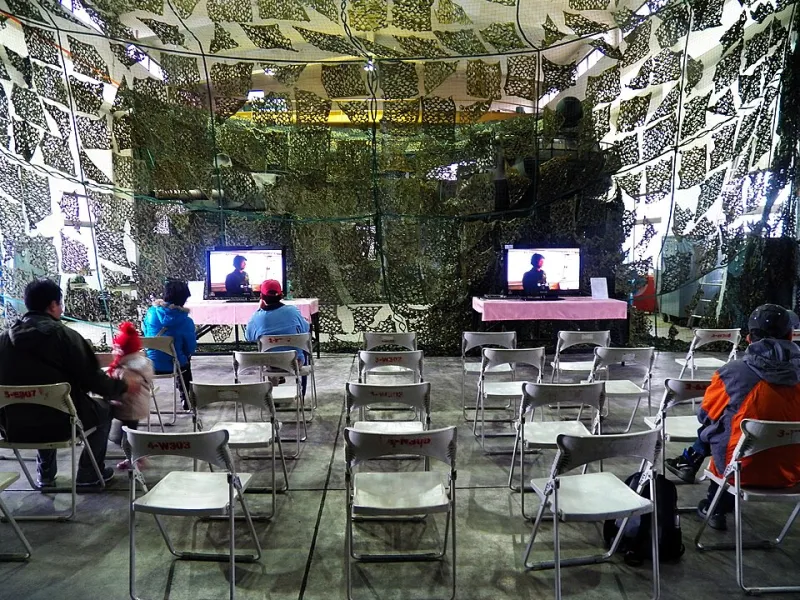
Photo: 玄史生, CC0, via Wikimedia Commons
I didn’t set out to spend a month avoiding movies. It started as a small frustration: I kept starting features and finishing none. Ten minutes in, I’d reach for my phone. Thirty minutes in, I’d remember another tab was open. So on the first Monday in October 2026, I made a rule that sounded ridiculous even to me: for thirty days, no feature-length films. Trailers, teasers, clips, behind-the-scenes featurettes—fair game. Anything with a real runtime—off the table.
The Rules Were Simple and a Little Absurd
I allowed myself movie trailers in theaters, on YouTube, on studio channels, and anywhere else they popped up. I could watch a two-minute teaser, a ninety-second spot, a four-minute extended preview, or a director’s breakdown of a single scene. What I could not do was sit through an actual movie.
The first few days felt like a loophole. I was still watching moving images with music and dialogue. I was still getting the little rush of a well-cut preview. But I wasn’t committing to a story. I was sampling, skipping, and moving on. It was the media equivalent of ordering a flight of appetizers and calling it dinner.
Why Trailers Feel So Satisfying
A good trailer is a masterclass in compression. It has to establish a world, introduce a tone, tease a conflict, and leave you wanting more—usually in under two and a half minutes. There’s no second-act lull. No subplot that goes nowhere. No moment where the pacing sags and you check the runtime. It’s all hook, no homework.
By the end of week one, I understood the appeal on a chemical level. Trailers are built for the way a lot of us actually watch now: in fragments, between tasks, with one eye on the screen and one eye on the clock. They don’t ask for a full evening. They ask for two minutes and a little curiosity.
That efficiency can be a trap, though. A trailer can make almost anything look like the movie you want to see. The right song, the right cut, the right three lines of dialogue—suddenly a project you’d never normally consider feels essential. I found myself getting genuinely excited about films I knew, deep down, I would probably never watch. The trailer had done its job. It had sold me the feeling of a movie without the movie itself.
The Attention Span Audit
Somewhere around day twelve, I noticed something uncomfortable: I could watch twenty trailers in a row without blinking, but the idea of a two-hour film felt like a commitment on par with doing my taxes. That wasn’t a great discovery. It was a mirror.
Trailers are designed to be disposable. They’re marketing, not storytelling. When you mainline them for a month, you start to see how much of the hype cycle is built on the same handful of beats: the ominous opening, the needle drop, the rapid-fire montage, the title card, the little stinger at the end. Once you see the pattern, you can’t unsee it. That’s not a bad thing. It just makes you a sharper viewer.
By week three, I was craving something a trailer can’t give you: patience. A slow build. A character who changes over ninety minutes instead of ninety seconds. I missed the feeling of being inside a story long enough for it to surprise me. That was the trade-off I hadn’t expected—the experiment made me better at consuming hype and worse at sitting still.
Hype Is a Story We Tell Ourselves
One of the most useful things I learned is that trailers don’t really sell movies. They sell possibility. They sell the version of the film that exists in your head before you’ve seen a single frame of the actual thing. That’s why the gap between a great trailer and a mediocre movie can feel so personal. You weren’t disappointed by the film. You were disappointed by the story you’d built around the preview.
That’s not a knock on trailers. It’s just the nature of the form. They’re advertisements with better editing than most advertisements get. The mistake is treating them as a substitute for the experience—or as a verdict. A trailer is a first impression, not a review.
The Unexpected Benefit: Better Choosing
By the end of the month, I had a watchlist built almost entirely on curiosity rather than obligation. Without full movies to distract me, I paid more attention to what actually pulled me in. Was it the director? The premise? A single shot? A performance I couldn’t stop thinking about? I started noticing which trailers made me lean forward and which ones just washed over me.
I also got better at reading the fine print. A trailer that leans hard on a single joke is probably telling you something about the movie’s confidence level. A teaser that shows almost nothing is usually protecting a twist. A preview that spoils the entire third act is a warning sign, not a gift. None of this is rocket science, but it’s easy to forget when the music is loud and the cuts are fast.
How to Watch Trailers More Intentionally
If you want to try a lighter version of this experiment, here’s what worked for me:
- Watch once for the gut reaction. Notice what you feel before you start analyzing. Excitement? Confusion? Fatigue? That’s data.
- Wait a day before adding anything to your watchlist. If you still want to see it twenty-four hours later, it’s probably not just the marketing talking.
- Pay attention to what’s missing. Trailers are built on omission. Ask yourself what the preview is carefully not showing you.
- Notice repeated beats. Once you spot the structure, you can enjoy the craft without being steamrolled by it.
- Use trailers as filters, not verdicts. A great trailer doesn’t guarantee a great movie. A bad trailer doesn’t guarantee a bad one.
What I’m Taking Back to the Theater
On day thirty-one, I watched a full movie again. It felt strange at first—slower, quieter, less immediately gratifying than the highlight reel I’d been living on. But somewhere in the second act, I stopped noticing the runtime. That was the whole point.
I’m not giving up trailers. I still love them. They’re a legitimate art form, and a good one can be more memorable than a mediocre feature. But I’m done letting them be the main course. They’re the appetizer. The meal is still the movie—the long, patient, occasionally messy thing that asks for your attention and gives something back.
Thirty days of previews didn’t kill my love of films. It just made me pickier about which ones deserve two hours of my life.