No Lines, No Excuses: Building a Wordless 90-Second Short on a Phone

Every short film I have started and abandoned died the same death: I wrote dialogue I could not cast, for characters I could not afford to dress, in locations I did not have access to.
So this time I removed all of it. No lines. No actors who needed to memorize anything. No location that required a permit. Ninety seconds, one phone, one weekend, and a rule I could not break: if a stranger could not follow the story with the sound off and the captions on, the shot was wrong.
This is the log. Not a manifesto, just what I actually did, what broke, and what I would tell someone starting their first micro-project in 2026.
The Constraint That Started It
The idea came out of a prop, which is how most of my ideas come, and which is also why my garage looks the way it does. I had a wind-up kitchen timer with a dented face, and I kept picking it up off the workbench and setting it down. That is a story engine. A countdown nobody explains.
That is the whole premise: a person sets a timer, does something small and slightly panicked, and the timer decides whether it was worth it. No dialogue required. No backstory delivered by a helpful sidekick. The audience gets ninety seconds and their own assumptions.
Discipline bonus: a wordless short has nowhere to hide. You cannot explain a bad performance with a good monologue.
Three Shots, Ninety Seconds
I stole the structure from a roadside sign. Setup, problem, punchline.
Shot one, about twenty-five seconds. Establish the object and the hand. Close on the timer being wound. We see the person only as forearms and shoes. That is not a stylistic choice; it is a scheduling choice. A hand is easier to direct than a face and it never gives a bad read.
Shot two, about forty-five seconds. The obstacle. My character is hunting for something in a cluttered kitchen, opening drawers, stacking pans, losing a full eight seconds to a cabinet that sticks. The camera goes handheld here, which covers for the fact that my framing was approximate and my patience was not.
Shot three, about twenty seconds. The reveal. The timer goes off. The person sits down with the thing they were hunting for, and it is something small and a little sad, and the timer gets wound again.
Ninety seconds, give or take. Cut four seconds in the edit, added eleven in sound.
The Kit Fit in a Hoodie Pocket
Total spend was under fifty dollars, and most of that was a pocket tripod I already owned.
- Phone, obviously, shot in the highest frame rate available, because slow motion is a free insurance policy for a shaky operator.
- A pocket tripod with bendy legs, which let me clamp to a cabinet handle for the overhead pan shots.
- A white foam board from the craft store, six dollars, used to bounce window light back into the shadows. Best money I spent.
- A dish towel taped over a small LED panel for diffusion. Without it, everything looked like a crime scene photo.
- A sock. Not a joke. I wrapped the phone in a sock for the drawer-drop shot so the impact would not spike the audio meter.
No gimbal. No rig. The longer I do this, the more I believe a rig is often a way to avoid starting.
Shooting Day, or: Everything That Broke
My plan said three hours. Reality said six, and the lost time had nothing to do with the film.
I shot the entire opener before realizing the window light had shifted color by about a thousand degrees and the first take looked like a completely different movie. Lesson one: block your shots around the sun, not around your coffee.
The sticking cabinet needed a human hand to hold it closed off-camera for continuity. That was me, on my knees, in the frame at the edge. I cropped it out.
The auto-focus hunted during the drawer montage. I fixed this later by locking focus and just accepting that the subject would drift slightly soft. At phone screen size, nobody noticed. At full screen on a laptop, one person noticed, and it was me.
Sound Design Is the Entire Movie
Here is the thing nobody tells you about a wordless short: audio is not support. Audio is the dialogue.
I spent two hours building a track for a ninety-second film, which felt absurd until I watched it back with the temp track muted. Silent plus silent equals dead. Ambience is what tells the audience the person is in a real place.
What I recorded, one thing at a time, in my quiet apartment with the phone a few inches from the source: a zipper, a drawer sliding on wood, a mug set down on a counter, a pot lid, a door hinge, the timer itself (which sounds cheap and awful and was therefore perfect), and forty seconds of room tone, which is the most boring and most important file in the whole project.
Then I built a slow crescendo. Ambience under everything. Foleys getting slightly louder as the timer runs down. A low hum I made from a recording of a refrigerator, pitched down, just loud enough to feel like pressure.
The timer bell was the only sound I let be genuinely loud. Nothing else in the film is allowed to be louder than that bell, because that bell is the punchline.
Screening Ninety Seconds Without Renting a Theater
I looked up venue rental prices for exactly four minutes before deciding that was a way to turn a fun weekend into a debt.
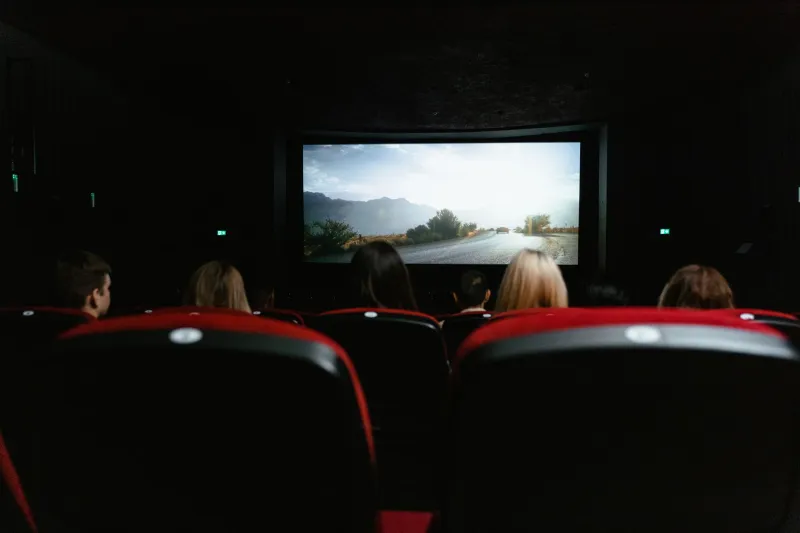
Here is what I did instead. I borrowed a small projector from a friend who uses it for backyard movie nights, hung a white bedsheet over a clothesline in my sister's backyard, and invited fourteen people with a group text. Printed twelve tickets on cardstock that said, in large type, NINETY SECONDS. RUNTIME: 90 SECONDS. My nephew collected them at the gate, which was two chairs.
We played it three times. Once with sound, once with sound off, once with my commentary, which is the only part anyone actually wanted. Total evening, two hours. Total cost, eleven dollars of snacks and a bedsheet.
A phone screen over a dinner table would have accomplished the same thing with less effort. I recommend the bedsheet anyway. There is a real difference between texting someone a link and sitting in the dark together for ninety seconds.
What I Would Tell a First-Timer
Start with the prop, not the theme. A story that comes out of an object is a story that has already solved its own production problem.
Cut dialogue early, not late. If you write it first and remove it in the edit, you are dubbing over a hole. Write it wordless from the first draft.
Give yourself one technical challenge and one emotional goal, and no more. Mine were locked focus and the timer bell.
Record sound on location even if you think you will replace it. You probably will replace it, but the room tone is permanent.
And screen the thing. Not for notes, not for a festival submission, just to sit in a room with people while ninety seconds of your own effort plays and is over before anyone gets bored.
The timer is already back on the workbench. I have got an idea for a second one and no idea what it means yet.